 English


Ever wondered how complex piping systems stay secure and efficient? Pipe clamps are the unsung heroes in various industries, offering stability and protection. These essential tools play a critical role in plumbing, woodworking, and industrial settings. In this post, you'll learn about different pipe clamp types, their applications, and installation tips to maximize performance and durability.
Pipe clamps consist of two main parts: the clamp heads and the pipe itself. The clamp heads are usually made of metal and designed to wrap securely around the pipe. They come in two halves that bolt together, creating a firm grip on the pipe. The pipe acts as a backbone, giving the clamp adjustable length and strength. This design allows the clamp to hold objects of various sizes by simply changing the pipe length.
The clamp heads often feature a screw mechanism or a quick-lock system to tighten or release the grip. Some pipe clamps include protective liners made from materials like rubber or neoprene. These liners cushion the pipe, preventing damage or wear from metal-to-metal contact.
Pipe clamps come in several types, each suited for different tasks:
● Standard Pipe Clamps: These are the most common, usually fixed with two screws. They can be lined or unlined and are versatile for many pipe sizes.
● Traditional Pipe Clamps: Including U-bolts and saddle clamps, these lack internal lining and are best for large steel or copper pipes where extra insulation isn’t necessary.
● Plastic Pipe Clamps: Made for lighter loads and smaller pipes, these clamps are quick to install and ideal for plastic or domestic copper pipes.
● Heavy Duty Pipe Clamps: Designed for heavy load support, these clamps can be used indoors or outdoors and sometimes feature lining for added protection.
Each type offers specific advantages depending on the pipe material, load requirements, and environmental conditions.
Choosing the right material for pipe clamps is crucial for durability and performance:
● Stainless Steel: Offers excellent corrosion resistance and strength. Ideal for harsh environments, including outdoor and industrial settings.
● Plastic: Lightweight and flexible, plastic clamps resist moisture and are suitable for lighter applications, such as electrical or sanitary installations.
● Copper and Brass: Often used in plumbing due to their corrosion resistance and aesthetic appeal. They handle temperature changes well.
● Chrome-Plated Steel: Provides a shiny finish and good corrosion resistance, often chosen for visible installations in homes or commercial settings.
● Galvanized Steel: Coated to resist rust, these clamps suit outdoor use where exposure to elements is common.
Materials also affect cost and lifespan, so matching the clamp material to the application ensures the best results.
Pipe clamps hold pipes firmly by wrapping around them and tightening securely. They consist of two clamp heads that encircle the pipe and fasten together using bolts or screws. When you tighten these fasteners, the clamp grips the pipe firmly, preventing movement. The pipe itself acts as a sturdy backbone, allowing the clamp to adjust in length and fit various pipe sizes simply by changing the pipe length.
Some pipe clamps use a screw mechanism for gradual tightening, while others may feature quick-lock systems for faster installation. Protective liners inside the clamp heads cushion the pipe, reducing metal-to-metal friction and preventing damage. This design ensures pipes stay stable during use, avoiding vibrations, impacts, or shifting that could cause leaks or breaks.
Pipe clamps work effectively across many settings:
● Industrial Plants: They secure pipes carrying hazardous fluids, preventing dangerous leaks and maintaining system integrity. Clamps can be welded or bolted to support structures, lifting pipes off corrosive surfaces.
● Plumbing Systems: Pipe clamps keep water and gas pipes stable inside buildings, preventing sagging and noise from vibrations.
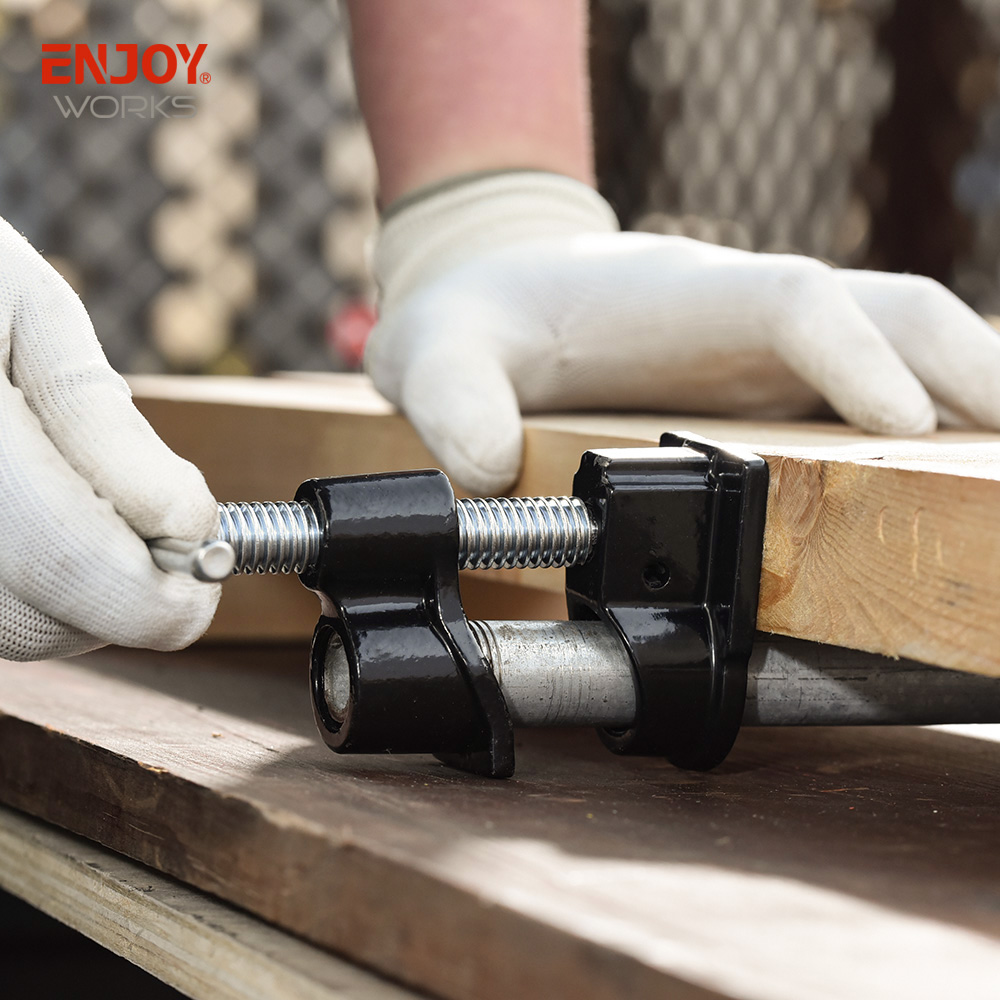
● Woodworking: Here, pipe clamps help hold wood pieces together during gluing or assembly by adjusting length to fit various board sizes.
● Outdoor Installations: Galvanized or stainless steel clamps resist rust and weather, ideal for exposed pipes in construction or irrigation.
● Cryogenic and Petrochemical: Specialized clamps maintain pipe positioning in extreme temperatures, reducing stress on the pipes and connections.
Using pipe clamps offers several advantages:
● Adjustability: Easily change pipe length for different projects, saving money by reusing clamp heads with different pipes.
● Protection: Liners reduce wear and corrosion on pipes, extending their lifespan.
● Safety: Secure pipes prevent accidental damage or hazardous leaks, especially in industrial environments.
● Versatility: Suitable for vertical, horizontal, or overhead pipe runs, adapting to various layouts.
● Vibration Dampening: Clamps minimize pipe movement and noise, improving system stability.
● Cost-Effectiveness: Durable materials and reusable components reduce maintenance and replacement costs.
Pipe clamps play a vital role in plumbing systems by securely holding pipes in place. They prevent pipes from sagging, vibrating, or moving, which could cause leaks or damage. These clamps accommodate various pipe materials such as copper, PVC, or steel, and come in different sizes to fit specific pipe diameters. For example, 15mm and 22mm pipe clamps are common for residential water supply lines, while larger sizes support drainage systems.
In plumbing, pipe clamps often feature protective liners to prevent corrosion and wear caused by metal-to-metal contact. They also help maintain proper pipe alignment and spacing, reducing stress on joints and fittings. Using galvanized or stainless steel clamps ensures durability in moist environments, preventing rust and extending the lifespan of the plumbing system.
In woodworking, pipe clamps serve a different but equally important function. They act as adjustable vices to hold wood pieces firmly during gluing or assembly. The clamp heads attach to a steel pipe, allowing the user to customize the clamp length by simply switching pipes. This flexibility makes pipe clamps ideal for projects of varying sizes, from small frames to large tabletops.
Woodworkers appreciate pipe clamps for their wide pressure surface, which distributes clamping force evenly. This reduces the risk of damaging or warping the wood. Adding protective pads between the clamp jaws and the wood surface further prevents marks or dents. Additionally, pipe clamps are cost-effective and durable, making them a staple in many workshops.
Industries rely heavily on pipe clamps to support and secure piping systems that transport gases, liquids, or chemicals. These clamps withstand harsh conditions, including extreme temperatures, vibrations, and corrosive environments. Heavy-duty pipe clamps made from stainless steel or galvanized steel are common choices due to their strength and corrosion resistance.
In industrial settings, pipe clamps help maintain the integrity of complex piping networks by preventing movement and reducing stress on connections. They are often bolted or welded to structural supports, allowing pipes to be suspended or elevated above potentially damaging surfaces. Specialized liners or vibration-damping materials may be used to protect pipes and reduce noise.
Moreover, pipe clamps contribute to safety by securing hazardous fluid lines, minimizing the risk of leaks or ruptures. Their versatility enables use in petrochemical plants, power stations, and manufacturing facilities, where reliable pipe support is critical.
Selecting the right pipe clamp is essential to ensure secure support and long-lasting performance. Several factors come into play when deciding which clamp best suits your needs.
● Pipe Material: The clamp should be compatible with the pipe material to avoid corrosion or damage. For example, stainless steel clamps work well with steel pipes, while plastic clamps are better for PVC or lighter materials.
● Environmental Conditions: Consider exposure to moisture, chemicals, or temperature extremes. Outdoor or corrosive environments demand clamps made from corrosion-resistant materials like stainless steel or galvanized steel.
● Load Requirements: Heavy pipes or those carrying hazardous fluids require heavy-duty clamps designed to bear significant weight and stress.
● Installation Location: Whether pipes run vertically, horizontally, or overhead affects clamp choice. Some clamps are better suited for hanging pipes, while others excel at floor or wall mounting.
● Adjustability: For projects needing variable pipe lengths, clamps with adjustable pipe sizes or quick-lock mechanisms offer convenience and flexibility.
● Stainless Steel: Ideal for harsh environments, outdoor installations, and chemical plants due to excellent corrosion resistance.
● Galvanized Steel: Suitable for outdoor use where moderate corrosion resistance is needed at a lower cost than stainless steel.
● Plastic: Best for light-duty applications, such as domestic plumbing or electrical conduit, where moisture resistance and ease of installation matter.
● Copper and Brass: Common in plumbing for their corrosion resistance and thermal properties; also provide a polished look for exposed pipes.
● Chrome-Plated Steel: Often chosen for visible indoor pipes due to aesthetic appeal and moderate corrosion resistance.
Proper sizing ensures the clamp fits snugly without damaging the pipe:
● Diameter Match: Choose clamps sized to the pipe’s outer diameter. Clamps too small won't fit, while oversized clamps may allow pipe movement.
● Length and Width: The clamp should cover enough pipe surface to distribute pressure evenly and avoid deformation.
● Spacing Between Clamps: Follow manufacturer guidelines for spacing to prevent sagging or excessive stress on pipes.
● Adjustability Range: For pipe clamps using adjustable pipes, ensure the pipe length range matches your project requirements.
Installing pipe clamps properly ensures pipes stay secure and damage-free. Follow these steps for a solid installation:
1. Select the Correct Clamp and Pipe SizeConfirm the clamp diameter matches the pipe's outer diameter. The clamp should fit snugly without forcing or leaving gaps.
2. Prepare the Mounting SurfaceClean the surface where you’ll attach the clamp. Remove dust, grease, or rust for better adhesion or secure fastening.
3. Position the ClampPlace the clamp around the pipe, aligning it with the mounting point. For adjustable pipe clamps, slide the clamp head along the pipe to the desired position.
4. Attach the Clamp to the SurfaceUse bolts, screws, or welding depending on the clamp type and mounting surface. Ensure fasteners are tight but avoid overtightening.
5. Tighten the Clamp Around the PipeTighten the clamp bolts or screws evenly. Avoid overtightening, which can deform or damage the pipe.
6. Check Alignment and SupportMake sure the pipe is level and properly supported. Adjust clamp positions if necessary.
7. Repeat Spacing Along Pipe RunInstall additional clamps at recommended intervals to prevent sagging or movement.
● Using Incorrect Clamp SizeToo large clamps allow pipe movement; too small can crush or deform pipes.
● Overtightening BoltsExcessive force can damage pipes or strip threads on clamps.
● Ignoring Protective LinersInstalling clamps without liners on sensitive pipes leads to corrosion or wear.
● Poor SpacingToo few clamps cause sagging; too many add unnecessary cost and complexity.
● Mixing Dissimilar MetalsCan cause galvanic corrosion. Match clamp material to pipe or use liners.
● Neglecting Surface PreparationDirt or rust reduces clamp stability and may cause failure.
● Regular Inspection Check clamps periodically for looseness, corrosion, or damage.
● Lubricate Threads Apply anti-seize or lubricant to bolts to ease future adjustments.
● Replace Worn Liners Protective liners wear out over time; replace to maintain pipe protection.
● Clean Clamp and Pipe Surfaces Remove dirt and debris that can cause abrasion or corrosion.
● Monitor Environmental Conditions Adjust clamp materials or coatings if exposed to harsh chemicals or weather.
● Retighten Bolts When Needed Vibration or temperature changes can loosen clamps over time.
Tip: When installing pipe clamps, always tighten bolts evenly and just enough to secure the pipe firmly—this prevents damage and ensures long-lasting support.
Pipe clamps are sturdy tools, but issues can arise during use. One common problem is insufficient clamping pressure, causing pipes or workpieces to slip. To fix this, check if the clamp is tightened evenly. Sometimes, adding another clamp nearby or using a different clamp type alongside can improve grip.
Another issue is pipe corrosion and wear, especially when clamps rub directly on metal pipes. Using clamps with protective liners or applying anti-corrosion coatings to pipes can prevent damage. Regularly cleaning and lubricating clamp threads also helps keep them functioning smoothly.
Uneven clamping pressure can cause warping or damage to pipes or wood. Adjust clamp positions and spacing to distribute pressure evenly. Using cauls or padding between the clamp and the surface can also help spread the force.
Sometimes, the clamp jaws slip on the pipe, making it hard to hold securely. Adding adhesive-backed sandpaper or textured tape inside the jaws increases friction and prevents slippage.
Corrosion shortens pipe lifespan and weakens clamp support. Avoid this by:
● Choosing clamps made of corrosion-resistant materials like stainless steel or galvanized steel.
● Using clamps with rubber or neoprene liners to prevent metal-to-metal contact.
● Applying protective coatings or rust inhibitors on pipes.
● Ensuring proper ventilation around pipes to reduce moisture buildup.
● Inspecting clamps and pipes regularly for early signs of corrosion or wear.
Even pressure is key to effective clamping and pipe safety. To achieve this:
● Tighten clamp bolts gradually and evenly on both sides.
● Space clamps according to manufacturer guidelines to avoid sagging.
● Use protective pads or cauls to distribute pressure over a wider area.
● Avoid overtightening, which can deform pipes or damage clamp threads.
● Check alignment frequently during installation and adjust as needed.
By addressing these common issues early, you can extend the life of both your pipes and clamps, while maintaining a safe and reliable system.
Regularly inspect and maintain pipe clamps to catch corrosion or pressure issues early, ensuring long-lasting, secure pipe support.
Pipe clamps are versatile tools, essential for securing pipes in various environments like plumbing, woodworking, and industrial settings. They offer adjustability, protection, and durability, with different materials and types suited for specific applications. The future of pipe clamps in the industry looks promising, with advancements in materials and designs enhancing their effectiveness. Enjoy Tools offers high-quality pipe clamps that provide reliable support, ensuring safe and efficient operations across diverse projects. Their products are designed to meet unique customer needs, delivering exceptional value and performance.
A: A pipe clamp is a tool used to hold pipes securely in place, consisting of clamp heads and a pipe for adjustable length and strength.
A: In woodworking, pipe clamps hold wood pieces during gluing or assembly by adjusting the pipe length to fit different project sizes.
A: Stainless steel pipe clamps offer excellent corrosion resistance, making them ideal for harsh environments and outdoor use.
A: Ensure even tightening, use clamps with liners, and add textured tape inside jaws to increase friction and prevent slippage.
